

Supervision is a structured, collaborative process where a more experienced professional supports and guides another in their clinical practice. I like to think of it as a mentor, support person, coach and colleague all rolled into one!
While it’s a well-established requirement for therapists and counselors, clinical supervision is less commonly discussed, and typically not required, for registered dietitians. I’m on a mission to change that, especially for dietitians working in outpatient settings.

Why Clinical Supervision Matters for Dietitians
As dietitians, we’re no strangers to rigorous science classes, challenging clinical internships, and the pressure of passing the RD exam. But if your training was anything like mine, you probably didn’t get much education in areas like:
- Motivational interviewing – how do we lead clients towards change?
- Starting a weight-inclusive private practice – what if they want weight loss?
- Trauma informed care – what questions are out of my scope?
- Body image – getting comfortable with discomfort.
- Counseling – what questions am I not asking, how do I keep them coming back?
These are crucial skills to learn and can take years to master! Yet, many of us enter the field without these tools. I know I did! Trying to navigate challenging conversations or patient cases successfully without these skills or support can lead to poor client outcomes, less retention, and increase the risk of burnout.
How Clinical Supervision Can Help You:
Clinical supervision offers a confidential, supportive space to grow as a practitioner.
Here are just a few ways I can help you through supervision:
- Navigating Challenging Cases: Get guidance on tough patient situations and ethical dilemmas.
- Weight-Inclusive Practice: Learn how to be weight-inclusive without alienating clients who come seeking weight loss.
- Exploring Weight Bias: Reflect on your own beliefs and biases in a safe, non-judgmental environment.
- Preventing Burnout: Use supervision as a place to vent and process difficult emotions so you can stay energized and passionate about your work.
- Supporting Body Image Work: Gain strategies for helping clients with body image concerns, including navigating body grief.
- Professional Feedback: Receive a second set of eyes on your social media posts, website, or client materials.
- Business Mentoring: Benefit from my experience (and mistakes!) in running a private practice, so you can avoid common pitfalls.
- Refining Your Mission: Get help clarifying your professional goals, attracting your ideal clients, and building a practice that keeps them coming back-and spreading the word so you can grow your private practice!
What’s the difference between taking a course and supervision?
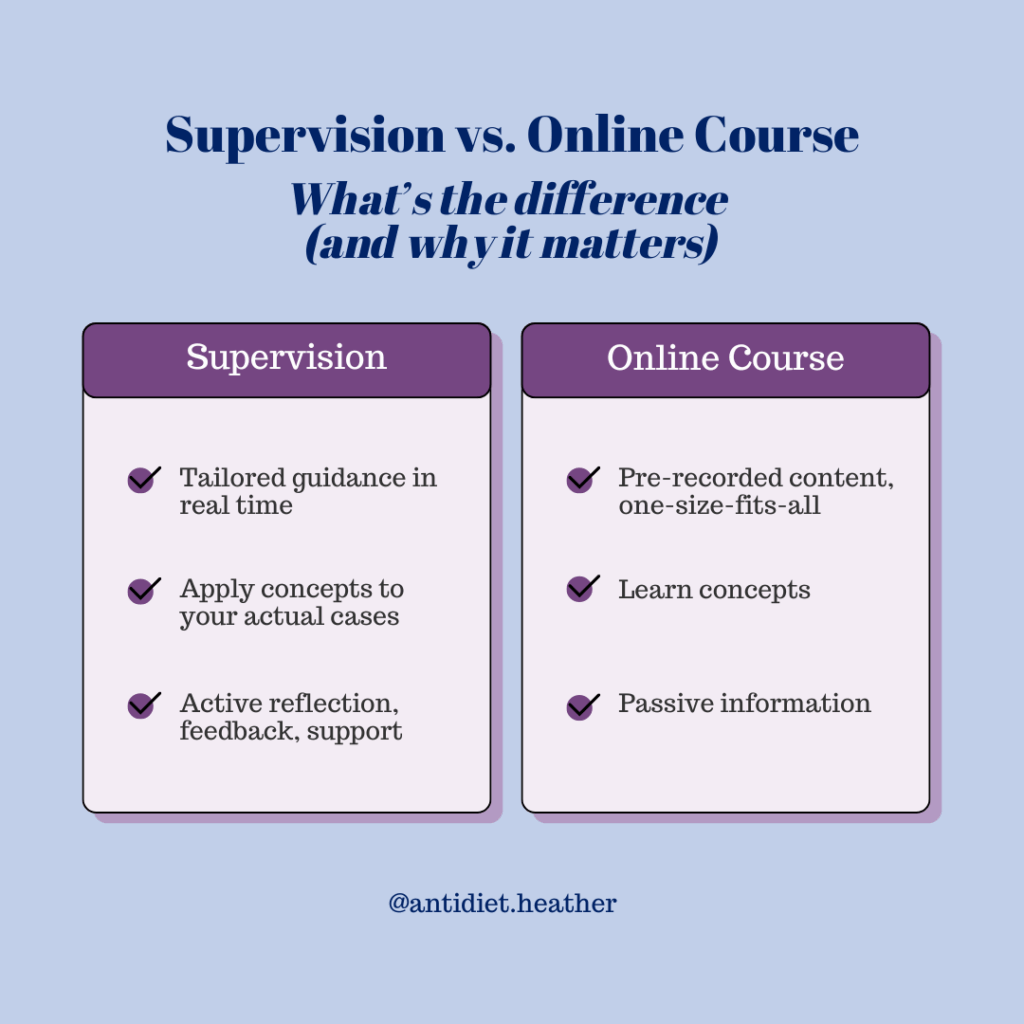
The biggest difference I see is that in supervision, you will learn exactly what to say to clients! I have taken my share of courses and they are wonderful but I always felt as if something was missing – specifically, what do I say when clients bring up wanting to lose weight for health reasons, or in order to feel more comfortable in their body? Navigating health concerns such as knee pain or non-insulin dependent diabetes, food – body relationships and body image, given our current culture, can be very tricky. This is especially true if you, as a provider, are in a small, white body.
When we lack confidence in our skill set, we are afraid to be bold in our marketing, only ask surface level questions in session and our clients may leave our office still ambivalent about change.
When we feel unsure, we might struggle with imposter syndrome, resist raising your prices, “forget” to ask for a testimonial (because what if they say something negative?) and our practice struggles with retention and growth.
It doesn’t have to feel this hard!
If you’re ready to grow your skills, prevent burnout, and build a thriving, values-driven practice, where you are so in demand you need to start a waitlist, consider making clinical supervision a regular part of your professional life.
Let’s work together to make supervision more acceptable and accessible for dietitians everywhere-starting with you!